How AI Chatbots and Automation Can Help Clinics Respond Faster and Reduce Missed Enquiries
Learn how AI chatbots and workflow automation can help private clinics answer routine questions, manage enquiries, and support appointment scheduling.

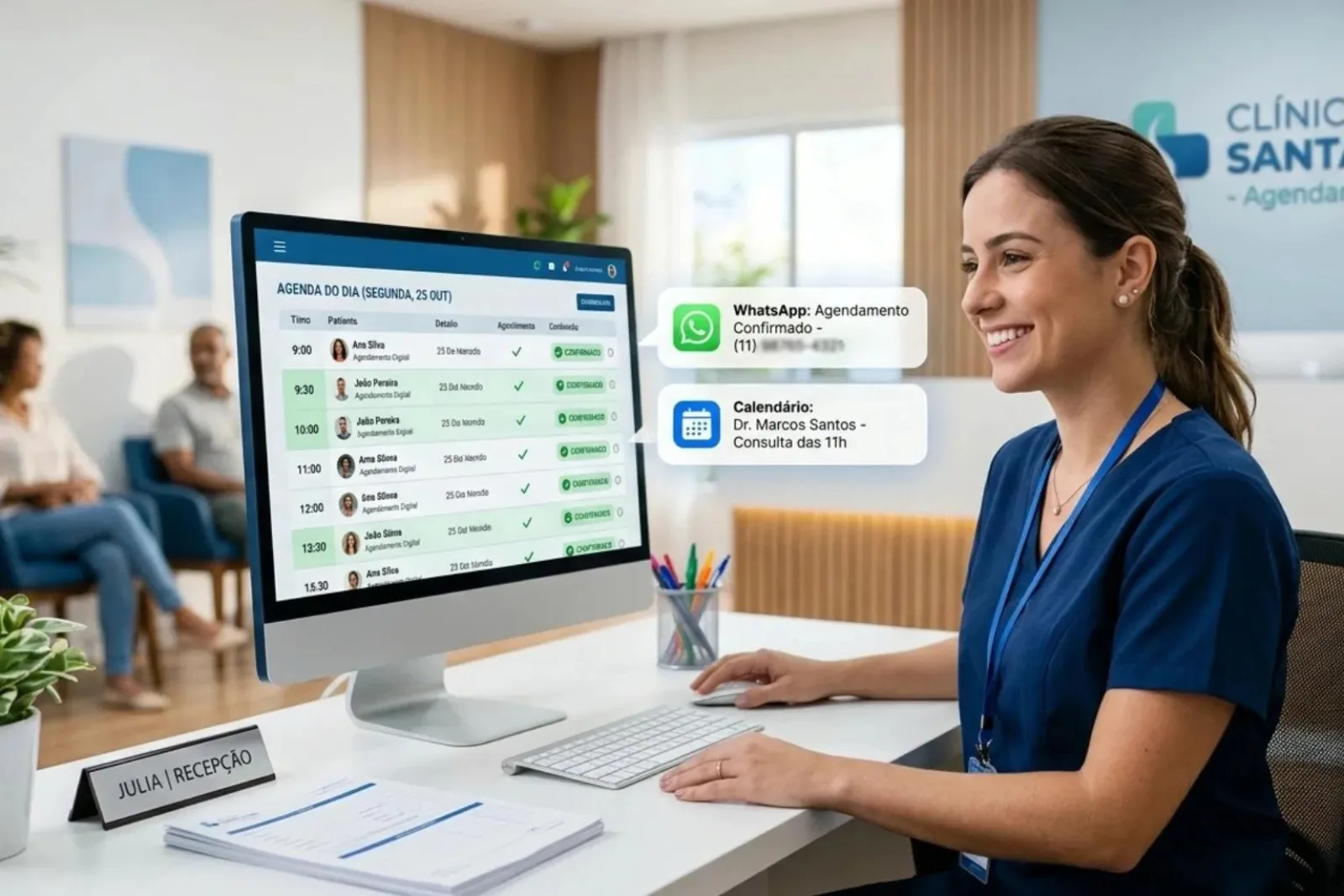
A potential patient visits your clinic website after business hours.
They want to know whether your clinic offers a particular service, where it is located, and how to make an appointment.
Your reception team has already finished work.
What happens next?
Without a clear process, the visitor may leave without submitting an enquiry.
This is one example of where practical automation can help.
AI assistants and workflow automation can support routine administrative tasks, provide approved information, and direct enquiries to the appropriate team.
The goal is not to replace clinical judgement or personal patient care. It is to make routine communication easier for patients and staff.
1. The Hidden Cost of Unanswered Enquiries
Private clinics often receive enquiries through multiple channels.
These may include website forms, telephone calls, WhatsApp, Facebook, Instagram, and online booking systems.
During busy periods, reception staff may be handling appointments, welcoming visitors, and answering questions simultaneously.
Messages can be delayed or overlooked.
Before introducing automation, examine the existing workflow.
Where do enquiries arrive? Who responds? What happens outside opening hours? How are unresolved messages followed up?
These questions help identify whether automation would solve a real operational problem.
2. What Can an AI Chatbot Actually Do?
A clinic AI chatbot can be configured to answer routine questions using information that the clinic has reviewed and approved.
For example:
Visitor: What time does your clinic open on Saturday?
Assistant: Our Saturday opening hours are 9 AM to 1 PM, according to the clinic's published schedule.
Visitor: How do I make an appointment?
Assistant: You can use our online booking page or contact the reception team.
These are administrative interactions, not medical consultations.
A properly designed assistant should have clear boundaries.
It should not diagnose symptoms, recommend treatments, interpret test results, or make clinical decisions.
When a question requires medical judgement, the assistant should direct the person to an appropriate human professional or approved clinical channel.
3. Help Visitors Find the Right Information
Many clinic websites contain useful information that is difficult to navigate.
Visitors may struggle to locate opening hours, service descriptions, practitioner profiles, directions, or booking instructions.
An assistant can make approved information easier to access through a conversational interface.
For example, a visitor might ask:
"Where can I find information about your physiotherapy services?"
The assistant can provide a link to the relevant service page.
This reduces the need for visitors to navigate several menus and can reduce repetitive administrative questions.
4. Support Appointment Scheduling
Appointment automation does not always require a complex integration.
A simple assistant may direct visitors to an existing booking page.
If the booking platform provides a suitable API and the clinic authorises integration, more advanced workflows may be possible.
These could include displaying available appointment options or passing a booking request into an approved system.
However, booking software varies widely.
Before promising integration, review its available features, permissions, security requirements, and technical documentation.
Sometimes a reliable booking link is the simplest and most cost-effective solution.
5. Automate Reminders and Administrative Follow-Ups
Not every useful automation needs generative AI.
Traditional workflow automation can handle predictable tasks such as sending appointment confirmations, issuing reminders, and notifying staff about unresolved administrative enquiries.
For example:
- A patient books through the clinic's approved scheduling system.
- The system records the appointment.
- An authorised reminder is sent through an appropriate communication channel.
- Staff can review relevant delivery or response status.
The clinic must consider consent, privacy, communication preferences, and the risk of revealing sensitive information in notifications.
A reminder should contain only the information necessary for its purpose.
6. Protect Patient Privacy and Clinical Safety
Healthcare automation requires stronger safeguards than an ordinary marketing chatbot.
Sensitive patient records should not be copied into general-purpose AI tools without a properly assessed and authorised arrangement.
An administrative assistant should operate from a limited set of approved information.
Important safeguards include:
- Restricting the assistant to approved clinic content
- Preventing unapproved medical advice
- Minimising personal information collection
- Providing clear escalation to human staff
- Reviewing access permissions and data retention
- Testing responses before public deployment
- Monitoring errors and updating outdated information
Privacy and healthcare regulations vary by jurisdiction. Clinics should obtain appropriate compliance guidance for their location and services.
7. How to Measure Whether Automation Is Working
Installing a chatbot is not a business outcome by itself.
Measure whether it improves the experience for visitors and reduces avoidable administrative work.
Useful indicators include:
- Average response time for routine enquiries
- Percentage of administrative questions resolved appropriately
- Number of enquiries successfully transferred to staff
- Booking-link interactions
- Unanswered enquiry volume
- Staff time spent on repetitive questions
- Incorrect or inappropriate assistant responses
Quality and safety should be reviewed alongside efficiency.
An assistant that responds quickly but provides unreliable information is not a successful implementation.
8. Start Small Before Building a Complex AI System
A sensible first implementation might answer only a limited set of frequently asked questions.
For example:
- Clinic opening hours
- Location and parking
- General service information
- Booking instructions
- Reception contact details
Test these responses thoroughly.
Once the assistant performs reliably, evaluate whether additional approved workflows would provide measurable value.
This approach reduces unnecessary complexity and makes it easier for staff to understand how the system works.
Conclusion
AI automation can be useful for private clinics when it addresses a specific operational problem.
It can make approved information easier to access, support routine enquiries, and reduce repetitive administrative tasks.
But it should not replace professional medical advice, clinical decision-making, or appropriate human supervision.
The best starting point is a simple, safe workflow that helps both patients and clinic staff.
Explore Practical AI Automation for Your Clinic
NusaDigital helps businesses connect websites, approved AI assistants, and operational workflows.
For private healthcare projects, we begin with the information your team approves and define clear boundaries for what automation can do.
Discuss AI & Automation for Your Clinic
Tell us which routine enquiries take up the most staff time. We can help assess whether a simple automation would be useful.