Why Your Real Estate Website Gets Traffic but Not Enough Buyer Enquiries
Discover why property websites fail to convert visitors into enquiries and how better listing pages, mobile experiences, and tracking can improve results.

Your real estate website is receiving visitors. People are viewing your property listings, exploring different pages, and spending time browsing available properties.
But the number of buyer enquiries remains disappointing.
It is tempting to assume that you need more website traffic. You might consider increasing your Google Ads budget, posting more frequently on social media, or investing in additional SEO content.
However, attracting more visitors will not necessarily solve the problem.
If your website makes it difficult for potential buyers to find information, compare properties, or contact your agency, additional traffic may simply mean more missed opportunities.
Before spending more on advertising, it is worth understanding why visitors are leaving without taking action.
1. Your Website May Be Attracting the Wrong Visitors
Not every website visitor is a potential buyer.
Some people are researching property prices, comparing neighbourhoods, or exploring investment opportunities without immediate plans to purchase.
Others may be looking for properties outside your available locations or price ranges.
Start by reviewing which pages attract traffic and where those visitors come from.
A page targeting "luxury villas in Bali" might attract a broad international audience, while a page focused on a specific property development may reach people with more defined requirements.
Both types of traffic can be useful, but they should not be evaluated in exactly the same way.
Align your website content and advertising with the buyers your agency wants to reach.
2. Property Listings Need to Answer Buyer Questions
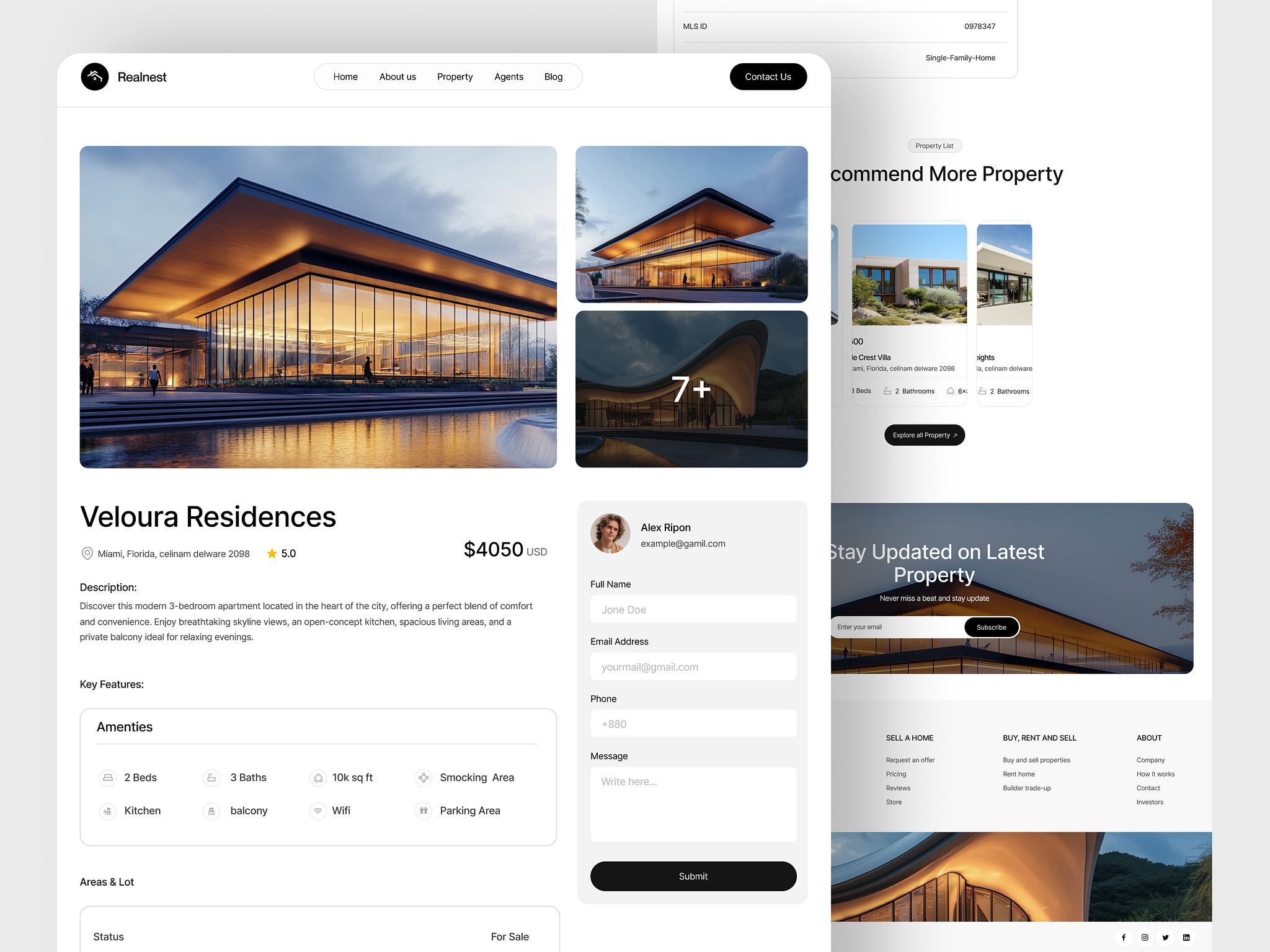
A property listing should provide enough information for someone to decide whether the property deserves further consideration.
Incomplete descriptions, unclear pricing, limited photography, and missing location information create uncertainty.
Potential buyers may leave rather than contact your agency for basic details.
An effective listing page should include:
- Clear property type, location, and key specifications.
- Professional photographs showing the actual property.
- Floor plans and property layouts where available.
- Accurate pricing or clear instructions for requesting pricing.
- Relevant amenities and nearby facilities.
- A visible enquiry or property viewing option.
For off-plan developments, consider explaining construction status, expected completion, and available documentation.
The objective is not to overwhelm visitors with information. It is to answer their most important questions and make the next step easier.
3. Make It Easy to Enquire on Mobile
Many property buyers discover listings through mobile searches, social media, and messaging apps.
A website that looks impressive on a desktop may still create problems on smaller screens.
Common issues include slow-loading images, difficult navigation, enquiry buttons hidden below long sections, and forms that require too much typing.
Test your website using a real mobile device.
Can someone find a relevant listing, review the important details, and contact your agency without unnecessary effort?
Consider using a prominent enquiry button, a short contact form, or a property-specific WhatsApp link.
Every enquiry should retain information about the property that attracted the buyer.
4. Use Clear Calls to Action
A generic "Contact Us" button is not always the most useful next step.
Someone browsing a specific property may prefer a more relevant action, such as:
- Request Property Details
- Schedule a Property Viewing
- Ask About Availability
- Speak With a Property Consultant
Different pages may need different calls to action.
A general neighbourhood guide could encourage visitors to explore available listings, while a property detail page should make it easy to enquire about that property.
Keep the wording specific and explain what happens after someone submits a request.
5. Reduce Friction in Your Enquiry Forms
Every additional form field asks visitors to invest more time.
If someone only wants to request a property brochure, a long questionnaire may discourage them.
Start with the information needed to respond effectively.
Name, contact details, property interest, and an optional message may be sufficient for an initial enquiry.
Additional information, such as purchase timeframe or budget, can be collected when appropriate.
The goal is to balance lead qualification with a straightforward customer experience.
6. Track Meaningful Website Conversions
Page views and visitor numbers provide useful context, but they do not explain whether the website supports your sales process.
Configure analytics to track important actions, such as enquiry form submissions, property viewing requests, and relevant contact interactions.
Google Analytics 4 can help you understand visitor behaviour and identify pages that contribute to conversions.
However, clicking a WhatsApp button is not the same as having a qualified conversation.
Where possible, connect website events with CRM records to understand what happens after the initial interaction.
7. Improve the Website Before Increasing Advertising Spend
Imagine your website receives 2,000 relevant visits and generates 20 enquiries.
That represents an enquiry conversion rate of 1%.
If improvements help the same traffic produce 30 enquiries, the rate increases to 1.5%.
This is a hypothetical example, not a promised outcome or industry benchmark.
The principle is simple: improving conversion can increase the value of existing traffic without immediately increasing advertising spend.
Test changes systematically.
Start with high-traffic property pages, mobile usability, enquiry forms, and calls to action.
Turn Your Website Into a Better Sales Channel
A successful real estate website is not measured by appearance alone.
It should help visitors find relevant properties, understand the offer, and contact your team with confidence.
NusaDigital builds and improves property websites, landing pages, enquiry forms, and analytics systems with the goal of making marketing and sales work together.
Getting traffic but not enough buyer enquiries?
Discuss your property website with NusaDigital.